PRD Meaning: What Is a PRD and How to Generate One Without Starting From Scratch
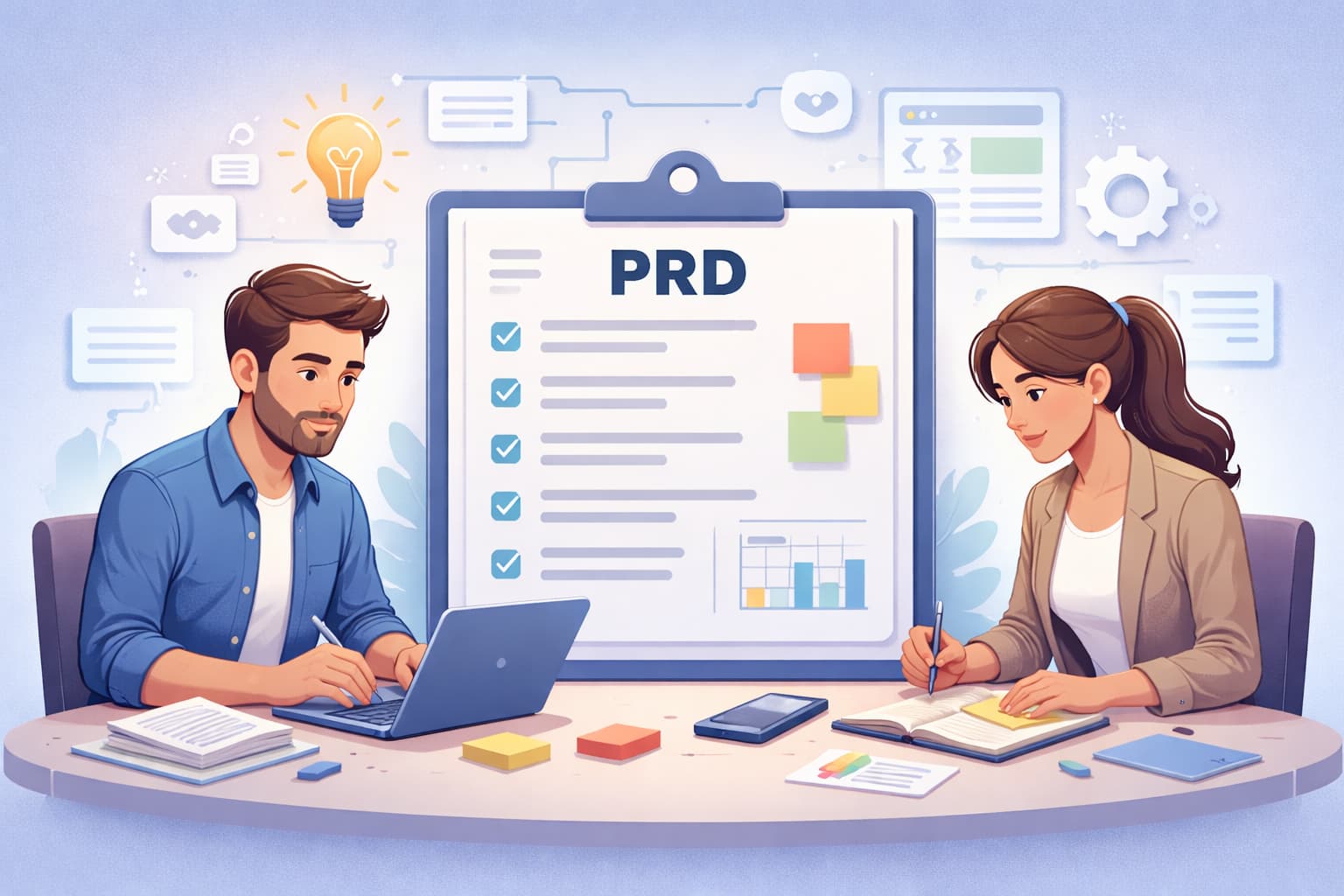
What is a PRD? (PRD Meaning Explained)
A lack of clear product definition is one of the main reasons projects exceed budgets and timelines. A PRD (Product Requirements Document) is a core product document that describes what a product should do, for whom, and why. It acts as a shared reference between product managers, designers, developers, stakeholders, and sometimes clients. Unlike technical documentation, a PRD focuses on product intent rather than implementation. Its purpose is to align everyone around a single vision before development begins.
Unlike technical documentation, a PRD focuses on product intent rather than implementation. Its purpose is to align everyone around a single vision before development begins. A typical PRD includes:
- Product context and objectives
- Target users and key use cases
- Functional scope and main features
- Constraints (technical, legal, security)
- Success criteria and KPIs
In short, a PRD answers one fundamental question: “What are we building, and how will we know it’s successful?”
When Should You Create a PRD?
A common misconception is that PRDs are only useful for large, complex products. In reality, a PRD can be valuable for projects of any size — as long as it is adapted to the project’s scope.
For large or complex projects, a PRD is almost essential. When multiple stakeholders, teams, or dependencies are involved, the PRD helps maintain alignment over time and across organizations. It reduces the risk of diverging interpretations and uncontrolled scope growth.
For mid-sized projects, a PRD acts as a stabilizer. It captures key decisions, clarifies priorities, and prevents important assumptions from remaining implicit. Even a lightweight PRD can significantly improve execution quality.
For small projects or MVPs, a PRD does not need to be long or formal. However, writing down the core objectives, main features, constraints, and success criteria still provides value. A concise PRD helps teams stay focused and avoid building unnecessary functionality.
A PRD should ideally be created before development starts, but after enough information has been gathered to make meaningful decisions. Too early, and the document is based on assumptions. Too late, and it becomes a justification rather than a guide.
Why PRDs Still Matter for Product Teams
Some teams see PRDs as outdated, overly rigid, or incompatible with agile ways of working. In fast-moving environments, documentation is sometimes perceived as a slowdown rather than a facilitator.In reality, most product failures are not caused by poor technical execution, but by unclear requirements, vague assumptions, and misaligned expectations between stakeholders. Without a PRD, teams often face:
- Scope creep
- Conflicting interpretations
- Rework and delays
- Poor cost and timeline estimations
A well-structured PRD helps teams clarify intent early, align business and technical perspectives, and establish a single source of truth that evolves with the project. It provides context for decision-making without dictating implementation details.
A PRD is not meant to freeze the product or replace collaboration. It creates a shared understanding that allows teams to move faster with confidence, rather than moving quickly in different directions.
The real problem is not the PRD itself — it’s the way PRDs have traditionally been created: heavy, static documents disconnected from real project constraints. Modern product teams need PRDs that are lightweight, structured, and grounded in reality, not abandoned PDFs written once and never updated.
PRD vs MRD vs Specifications: What’s the Difference?
These documents are often confused, yet they serve very different purposes.
PRD vs MRD
An MRD (Market Requirements Document) focuses on the market:
- Customer needs
- Business opportunity
- Competitive landscape
A Product Requirement Document(PRD) translates those insights into a concrete product:
- Features
- User interactions
- Functional scope
A MRD explains why a product should exist whereas a PRD explains what should be built.
PRD vs Specification
PRDs and Specifications are often used interchangeably, but they serve different purposes and address different levels of detail.
A PRD is primarily product-oriented and user-focused, helping align business, product, and technical teams around a shared vision.
Specifications, on the other hand, tend to be more generalist and execution-oriented. They describe how the product should behave in practice, often with less emphasis on product strategy and more focus on functional clarity.
In ScopeWise, Specifications are already a core feature. They are designed to provide a clear, structured overview of functional scope. Rather than replacing Specifications, the PRD builds upon them. This means you can move naturally from general functional definitions (Specifications) to a more product-driven document (PRD), without rewriting everything from scratch.
Need to get specification? 👉 Click here
How We Generate a PRD
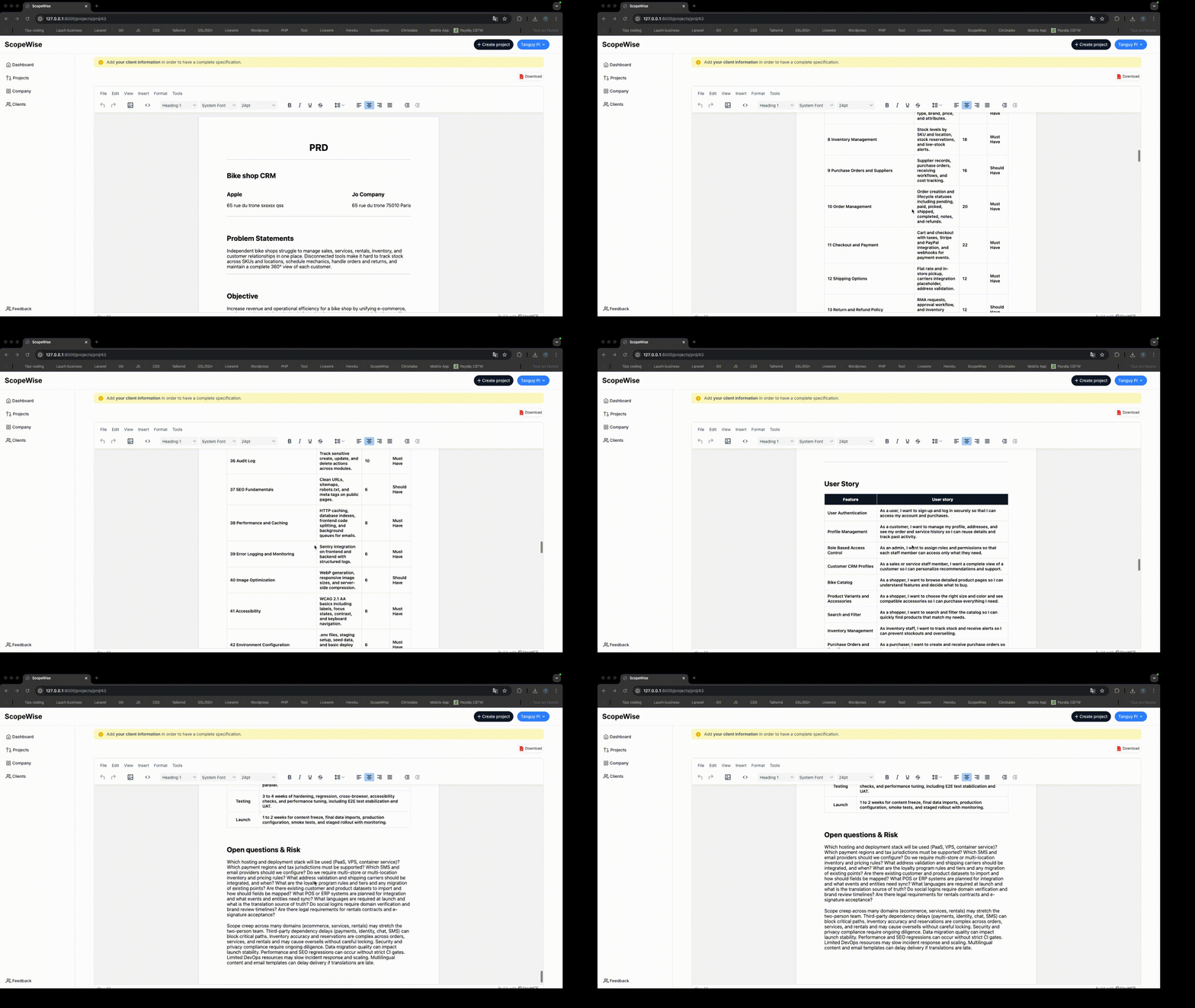
At ScopeWise, your PRD generation does not start from an empty document. It starts from something far more valuable: your project estimation. Before generating a PRD, users first describe their project and we provide you an accurate estimate thanks to our AI. This estimation phase captures the essential informations of the project which allow to generate the PRD after. This step is critical because it grounds the PRD in real project data, not abstract ideas.
Once the estimation is completed, ScopeWise uses it as the foundation for PRD generation. Instead of rewriting requirements manually, the system transforms existing inputs into a structured Product Requirements Document. So, you don't have to do anything, just wait for the end of the generation.
The generated PRD follows a clear and consistent structure, typically including:
- Problem Statements: What problem does the product solve?
- Objective: What are the business goals of the product?
- Who's it for?
- Product Scope: List of the features, description, estimated time, priority
- User Story
- Design & UX
- Technical Requirement: Information relating to the technical stack, security, and external dependencies...
- Timeline of the project: Kick-off, development, testing, launch
- Open questions & Risk
As you can see above, we decided to not include some classic section such as the Success Criteria for example. No need to worry, you can add it manually if you want by using our text editor.
The fact that the PRD is editable allows you to customize it as you wish. For example, you can add a logo or change the font.
Once finalized, the PRD can be downloaded as a PDF in order to share it with clients or stakeholders or use it as contractual or reference documentation. By connecting estimation and documentation, we ensures that PRDs are consistent, realistic, and actionable — not just well-written documents.
Beyond PRDs: What’s Next?
PRDs are only one piece of the puzzle. At ScopeWise, our long-term vision is to:
- Generated and linked by AI estimations, PRDs, specifications, and planning (coming soon)
- Allow documents to evolve with the project
- Reduce the gap between what is decided and what is built
Product documentation isn't the most fun part, but it's still one of the most important things.
Want to scope your next project faster?
Turn ideas into estimates, documents, and delivery-ready plans in one workspace.